Solution accelerator with 4:32 screencast
LIMS for environmental testing labs
From the sampling point to the final report, with field sampling on a phone, chain of custody and every hold time kept.
Demonstration application. Functional and built with AppMaker, but not a finished, validated or production-ready laboratory system. It is a starting point that we adapt for each laboratory.
Chapters
The screencast follows a fictional water testing laboratory, “Riverbend Environmental Laboratories”, and its fictional clients. Sites, samples, people and results are invented sample data. Map data © OpenStreetMap contributors.
Screens from the demonstration
Select a screenshot to view it at full size.
-
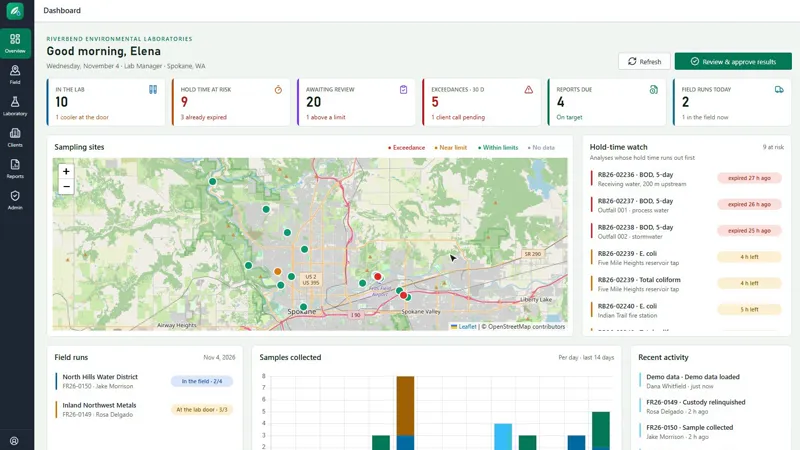
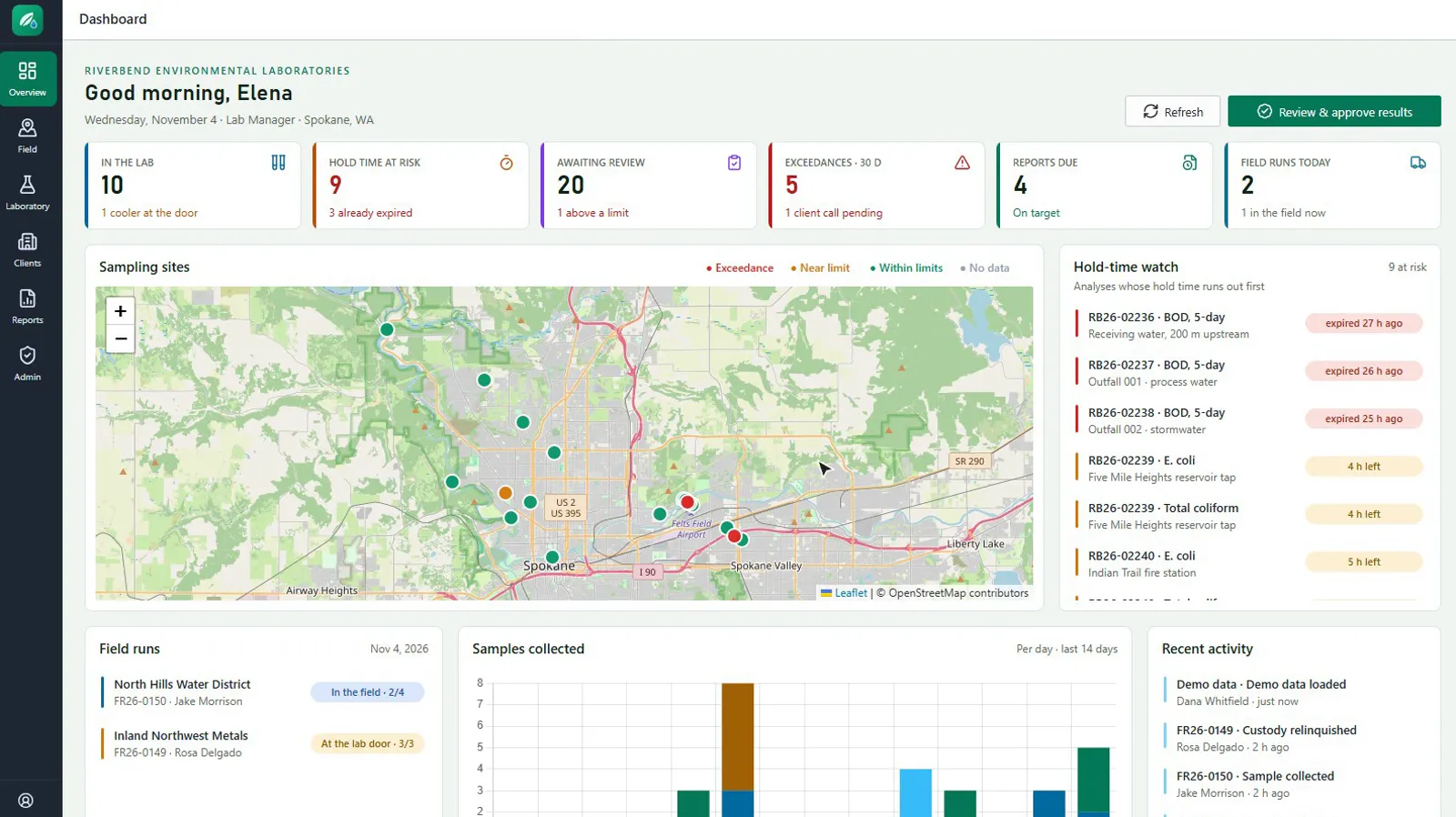
Dashboard with the sites map coloured by latest results and the hold-time watch -
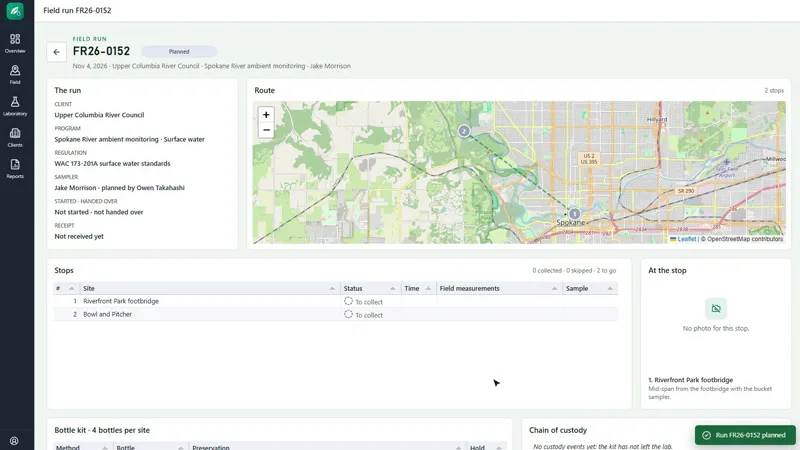
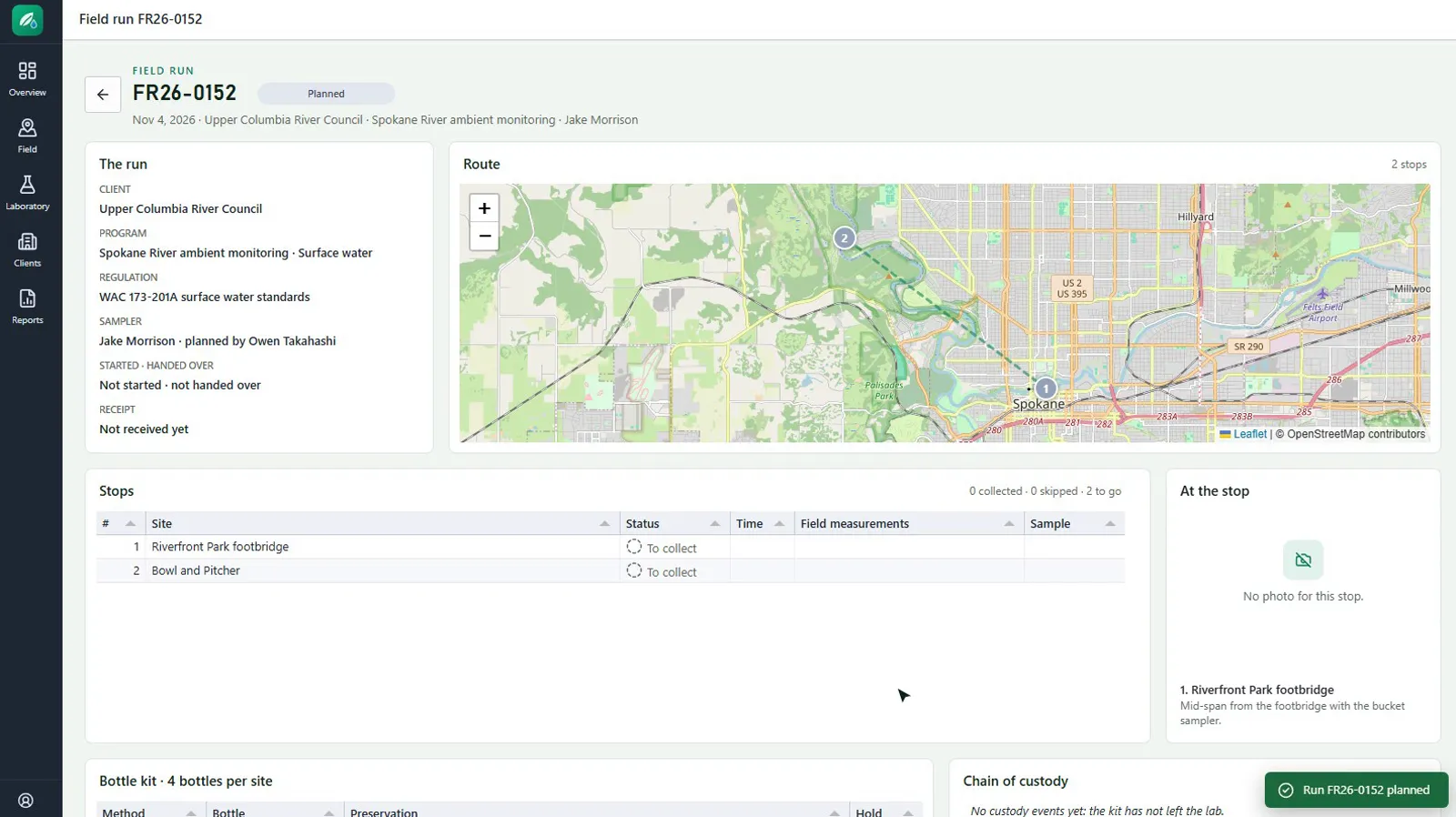
A planned field run with its route, stops, bottle kit and chain of custody -
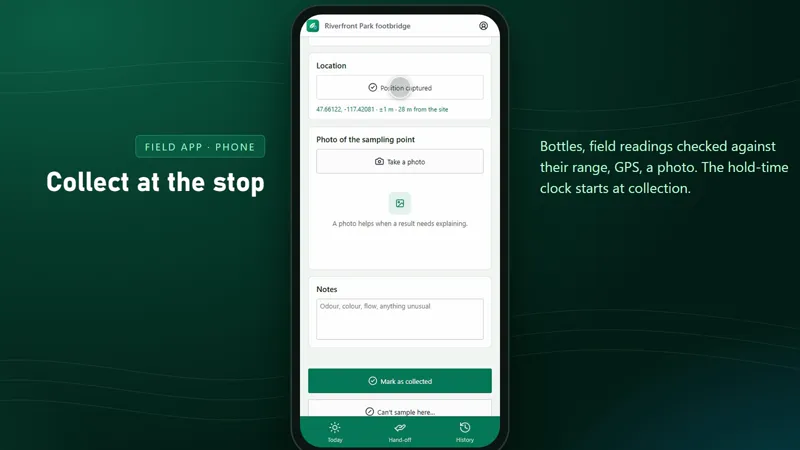
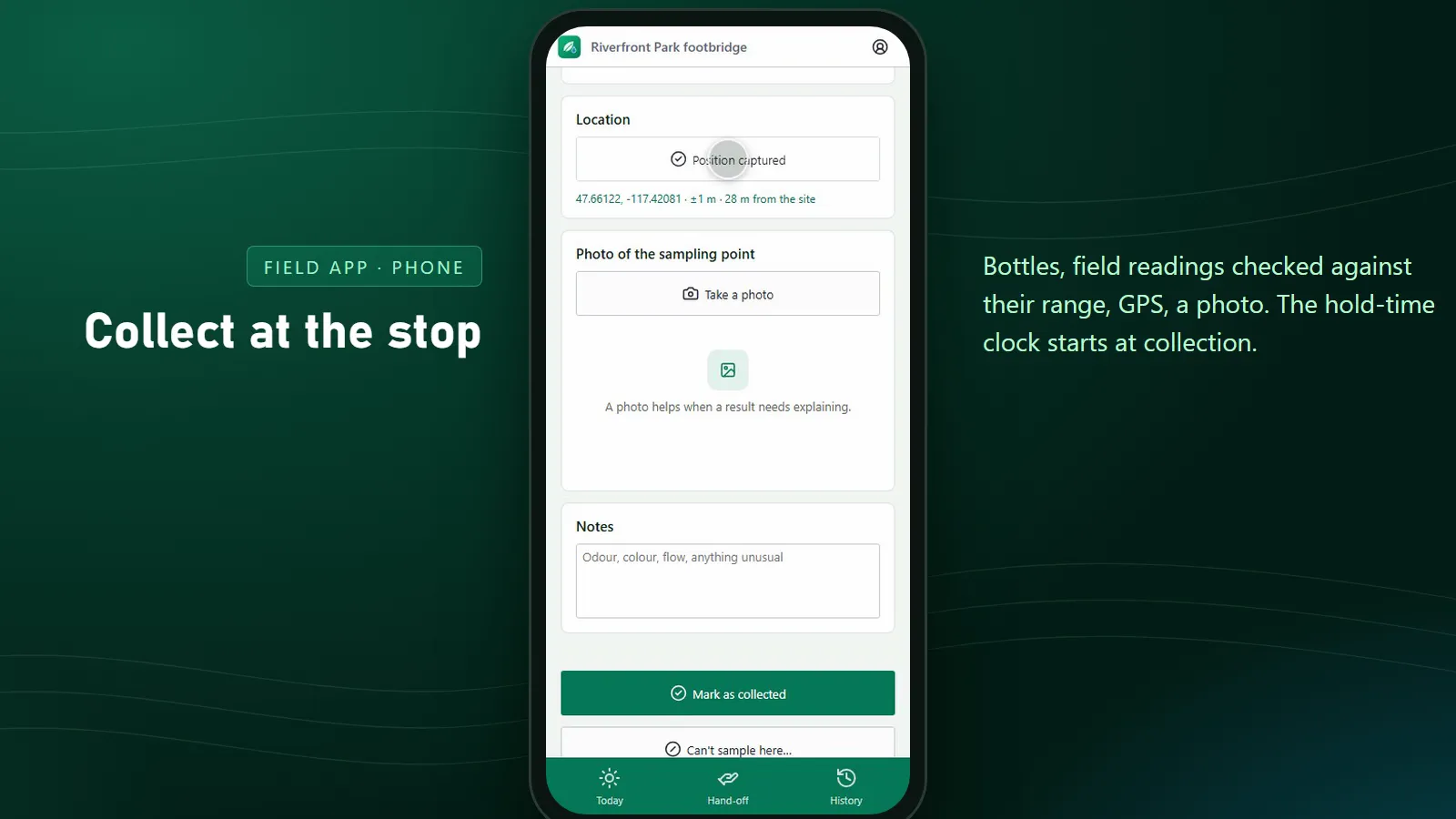
The field sampler’s phone app at a stop: bottles, field readings, GPS and photo -
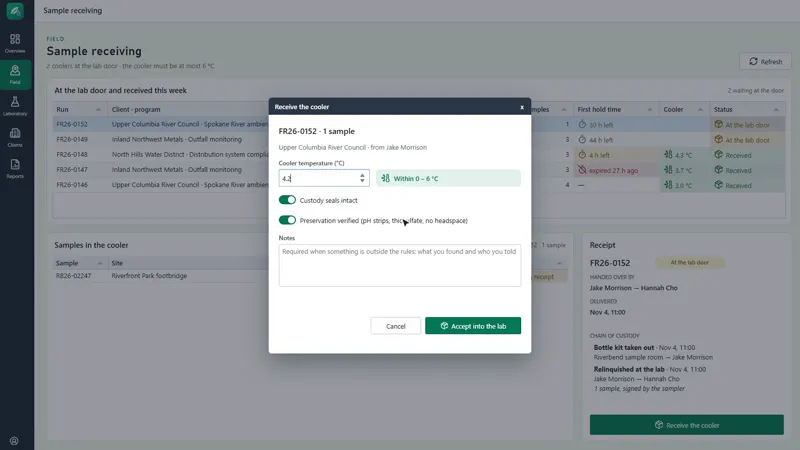
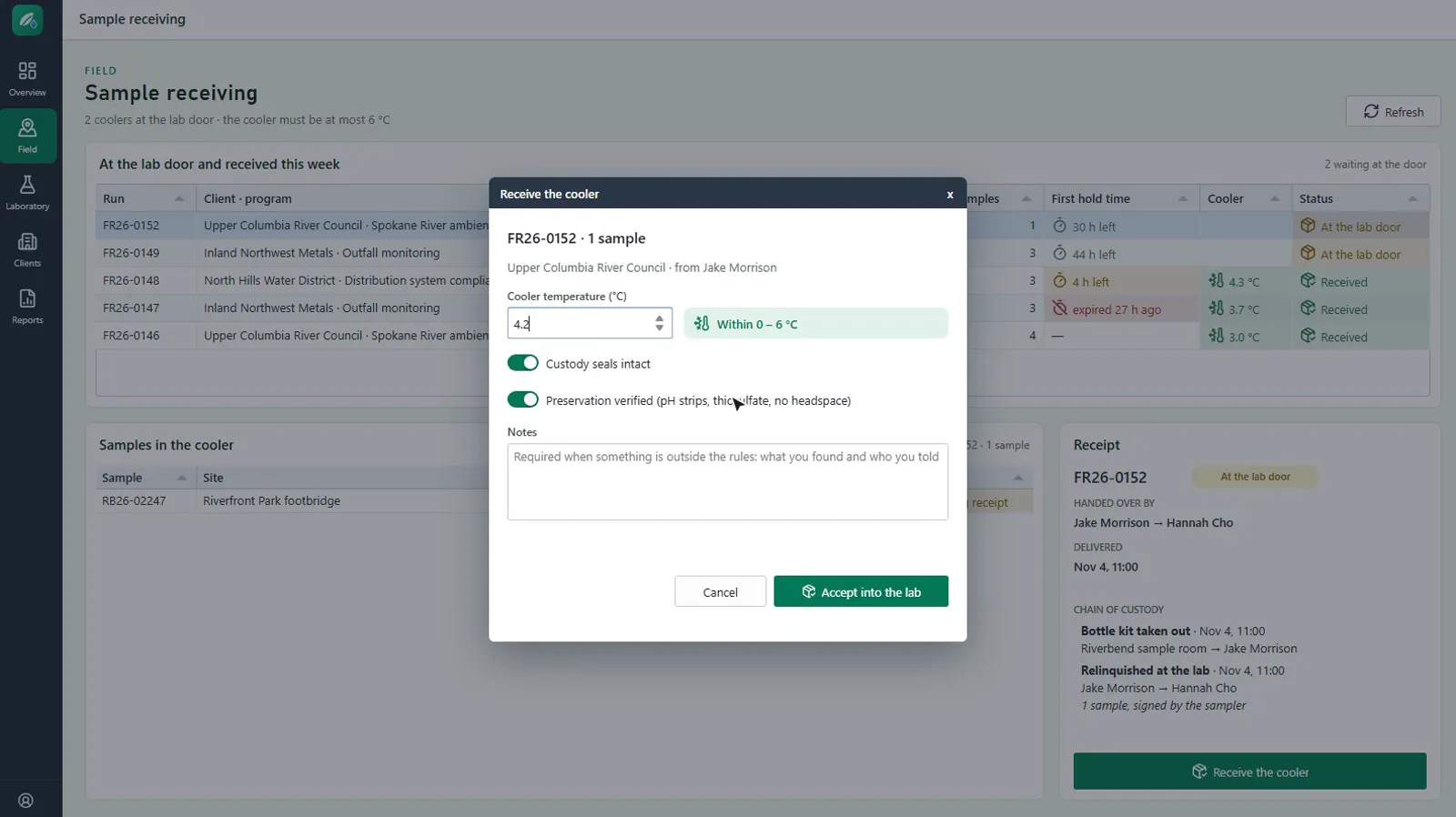
Receiving a cooler: temperature, seals and preservation checks -
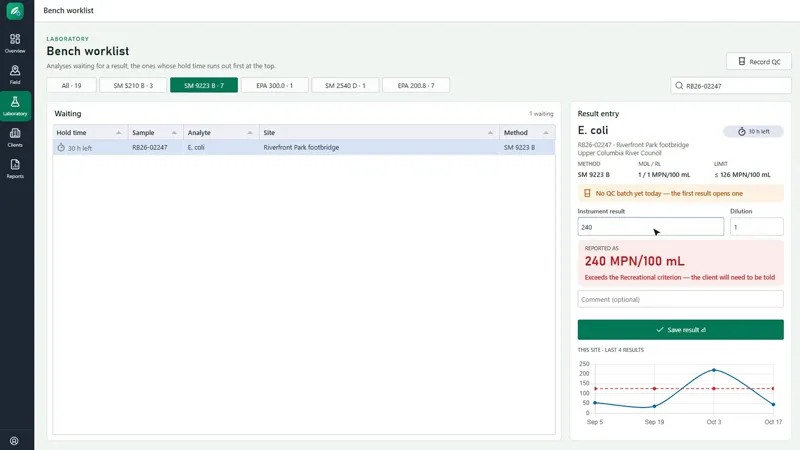
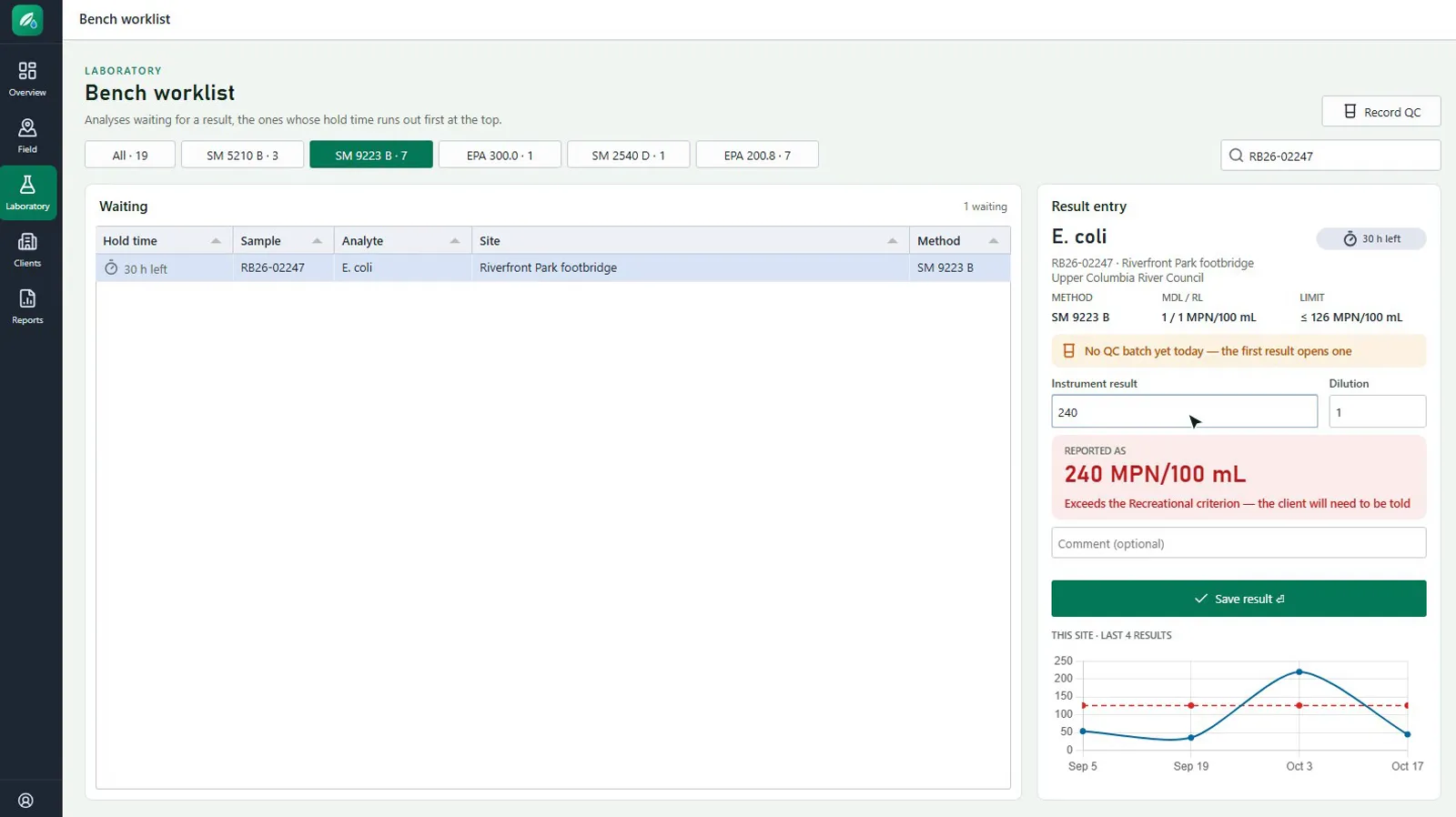
Bench entry showing the reported value and the limit check as the result is typed -
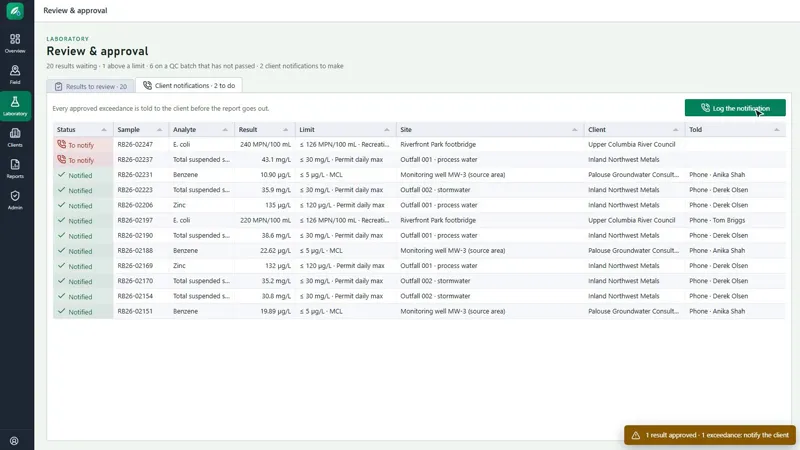
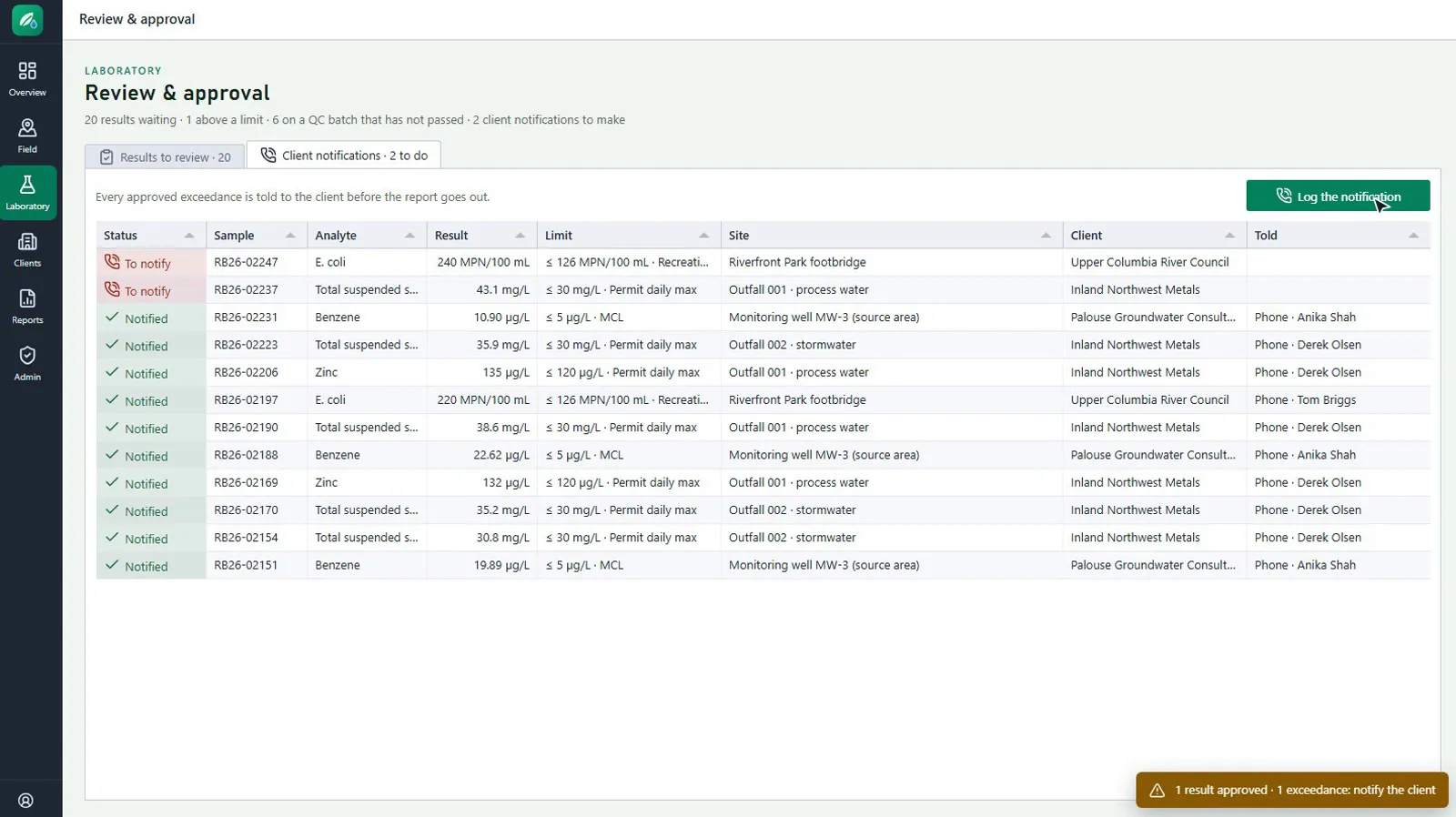
Review and approval with exceedances flagged -
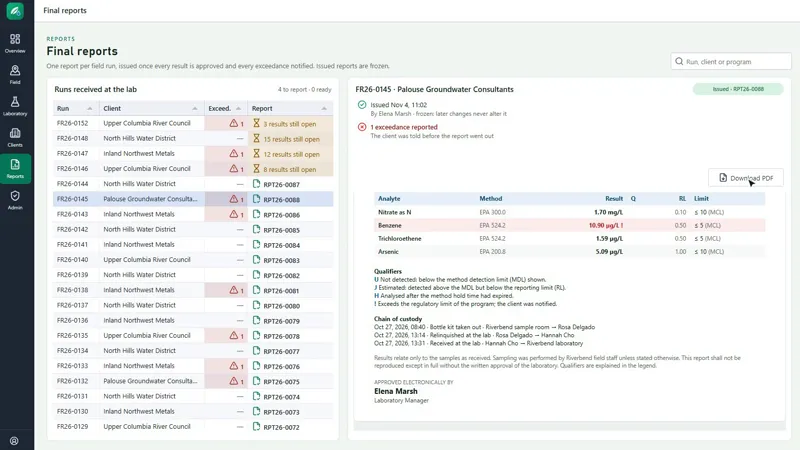
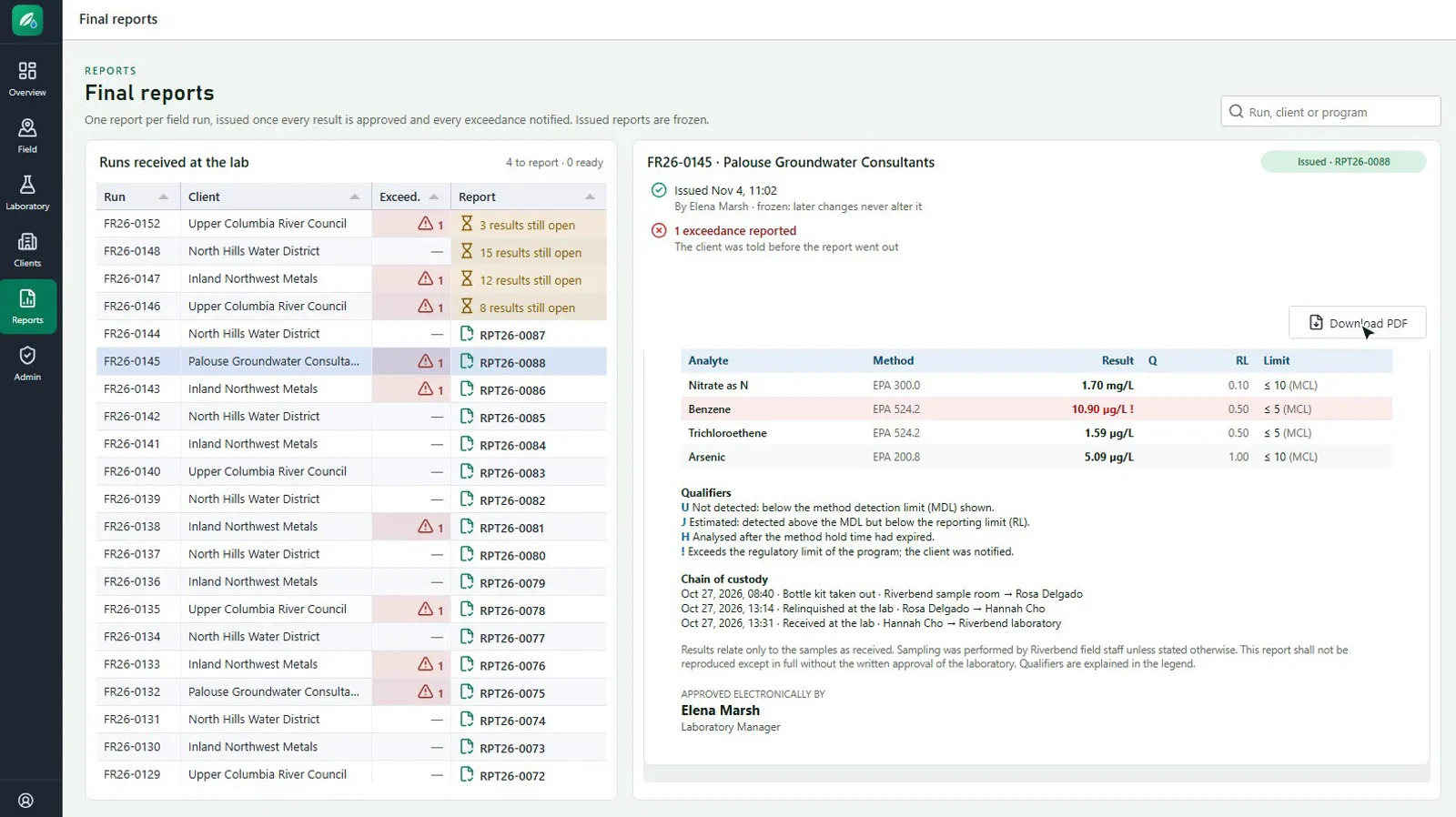
Final report readiness and preview before it is issued -
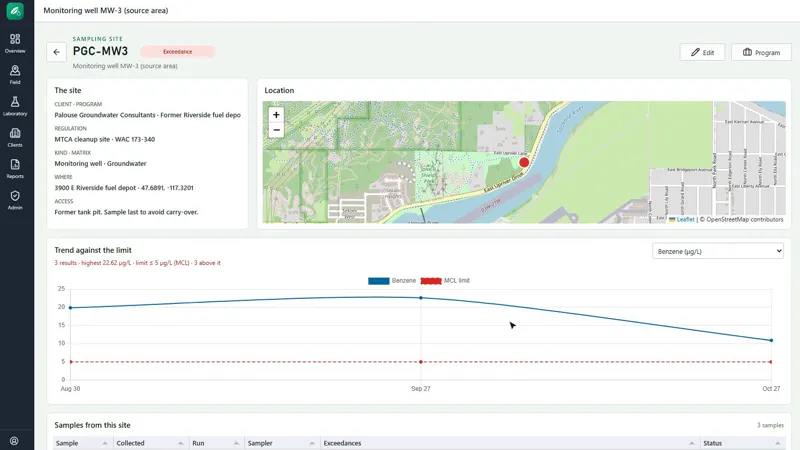
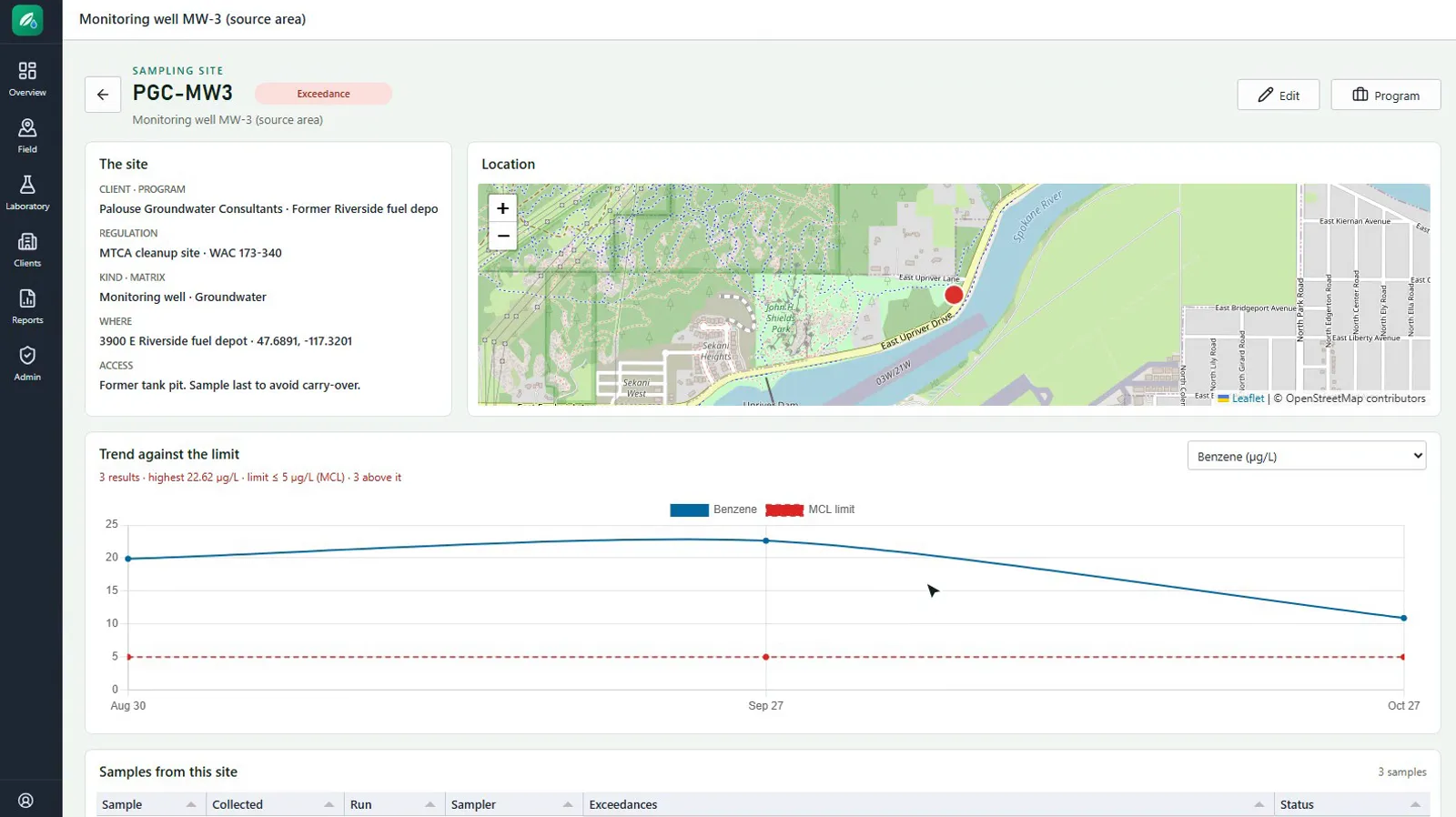
A monitoring well with its results trended against the regulatory limit
Adapting it to your laboratory
A starting point for environmental and water testing laboratories, especially those with their own field sampling teams. Typical adaptations include:
- Your programs, sites, analytes, methods and regulatory limits
- Field forms, bottle kits and readings for your sampling programs
- Hold-time, qualifier and QC rules from your methods and accreditation
- Report layouts, client notification rules and electronic data deliverables
- Integration with instruments, an existing LIMS or a client portal
Turning a demonstration into a system your laboratory relies on involves the same work as any laboratory software project: requirements, configuration around your data, integrations, testing, and validation where your quality system requires it. Starting from working software simply shortens the path.
Considering something like the environmental LIMS?
Tell us about your laboratory and what you would need the environmental LIMS to do differently. We will tell you what adapting it would involve.